Beginner vs Collector Substrate Strategy
Why experienced growers use chunkier mixes - and why beginners usually shouldn’t start there
One of the biggest surprises in plant growing is this: The “best” potting mix depends more on the grower than the plant. Plants don’t fundamentally change between beginner and collector homes - management skill does. Substrate strategy is really about risk management.
The Core Difference
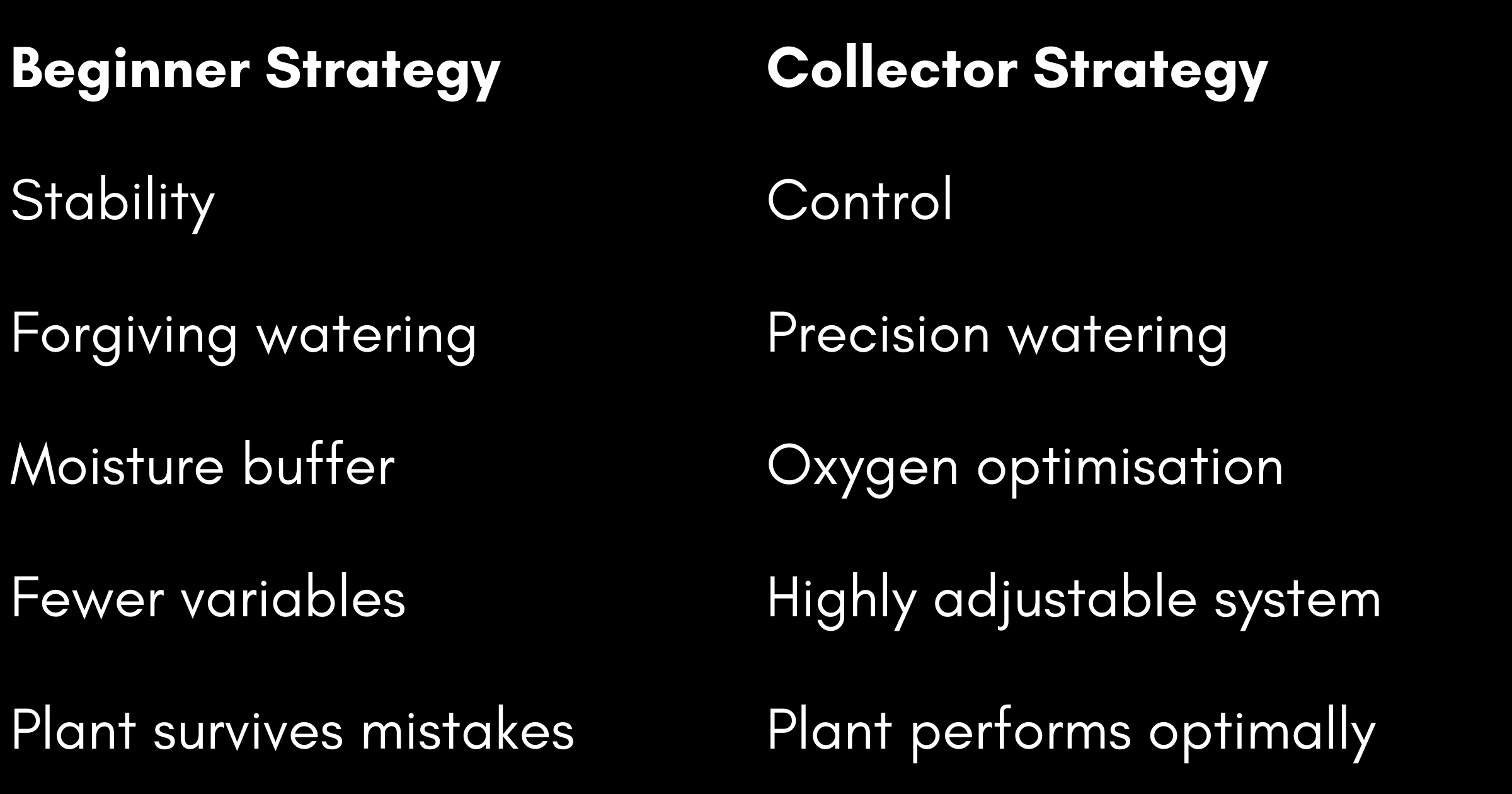
Think of it as:
Beginner mix = autopilot
Collector mix = manual transmission
Stage 1: Beginner Substrate Strategy
Goal: Prevent plant death
Beginners struggle most with:
inconsistent watering
learning plant signals
environmental variability
fear of underwatering
So the substrate must compensate.
Beginner Mix Philosophy
A beginner substrate should:
Hold moisture longer
Dry slowly and predictably
Contain nutrients
Work across many plants
Require minimal adjustment
In science terms, beginners benefit from higher water-filled pore space and moderate aeration.
Typical Beginner Mix Composition
Common structure:
Ready-made potting mix (base)
Coco peat or peat moss
Small amount of perlite or bark
Why this works
Fine particles create capillary water retention, meaning moisture spreads evenly through the pot.
Roots always find water.
Advantages
Forgiving if watering is forgotten
Lower fertiliser complexity
Easier transition from nursery plants
Stable microbial environment
Drawbacks (that appear later)
Compacts over time
Reduced oxygen availability
Higher root rot risk indoors
Slower root growth
But early on, these are acceptable trade-offs.
Best Plants for Beginner Strategy
Peace lilies
Pothos
Philodendron hederaceum
Syngonium
Aglaonema
Most nursery foliage plants
These species tolerate lower oxygen conditions.
Beginner Watering Relationship
The mix does most of the thinking. Watering rule becomes simple: water when mostly dry.
Stage 2: Intermediate Transition
The “Why are my expensive plants rotting?” phase. This is where growers notice:
collector plants decline in standard mix
roots rot despite careful watering
soil stays wet for too long indoors
The realisation: Indoor environments have less evaporation than greenhouses. So growers begin increasing aeration.
Transitional Mix Changes
Add structure: Orchid bark; Pumice; Perlite; LECA
Goal: increase air-filled porosity.
Stage 3: Collector Substrate Strategy
Goal: Maximise root performance
Collectors optimise for:
faster growth
rare plant stability
root health visibility
fertiliser control
environmental consistency
Collector Mix Philosophy
Collectors prioritise:
Oxygen availability
Fast drainage
Root respiration
Nutrient control via fertiliser
Water is delivered intentionally - not stored passively.
The Science Behind Chunky Mixes
Roots require oxygen for cellular respiration:
Sugar + Oxygen → Energy (ATP)
When pore spaces fill with water:
oxygen diffusion drops ~10,000× slower in water than air
roots suffocate
anaerobic microbes dominate
Chunky substrates maintain macropores - permanent air channels.
Typical Collector Mix Structure
Instead of one material doing everything:
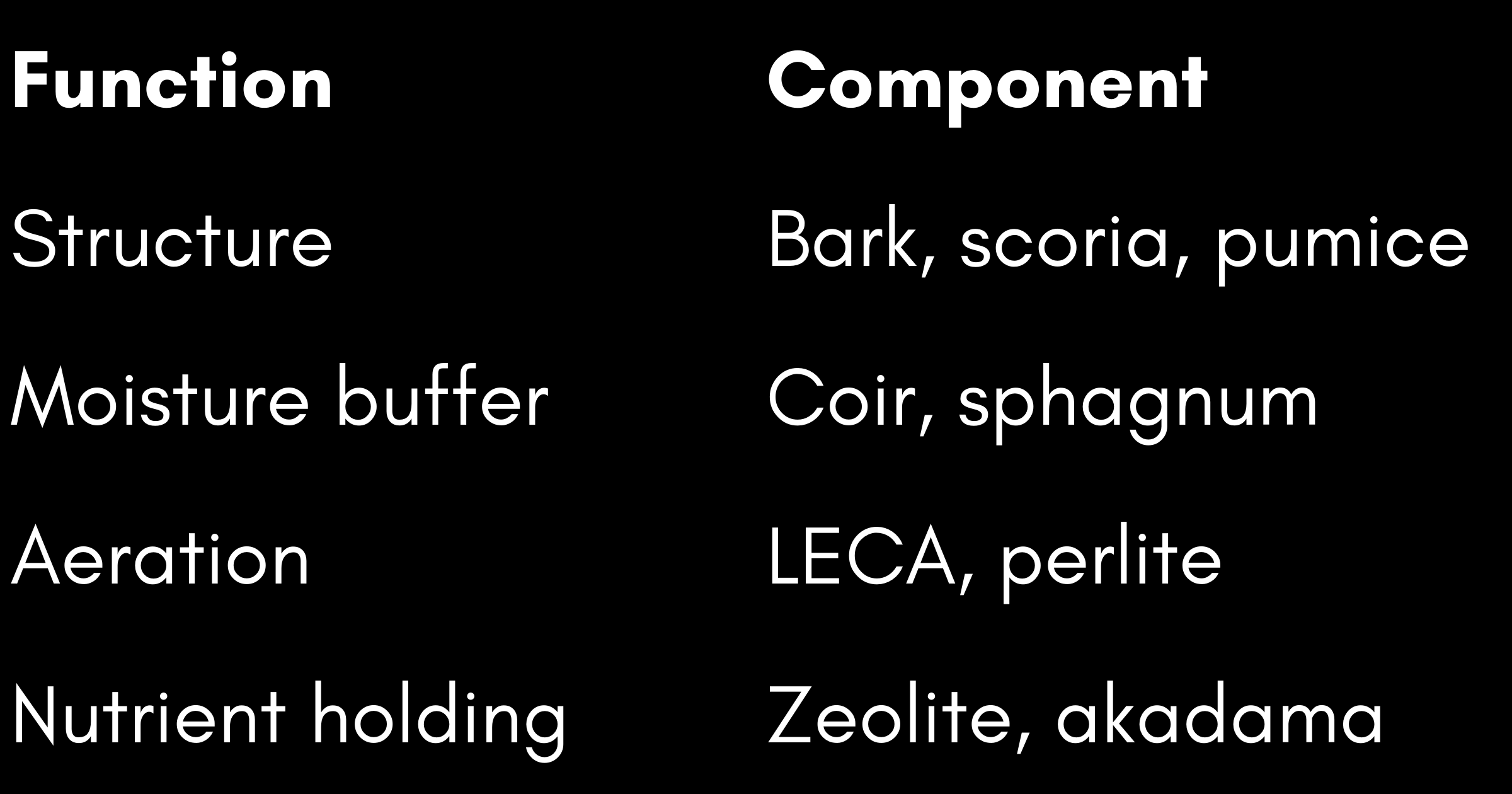
Each ingredient has a job.
Advantages
Faster root growth
Lower rot risk
Faster drying control
Predictable fertilisation
Better suited to indoor conditions
Drawbacks
Requires frequent watering
Needs fertiliser knowledge
Less forgiving of neglect
Higher cost
Collector mixes trade convenience for performance.
Plants That Prefer Collector Strategy
Especially oxygen-demanding species:
Anthurium (velvet types)
Rare Philodendron
Alocasia
Epiphytic orchids
Hoya
Begonia species
These evolved in airy environments like tree canopies or leaf litter.
The Hidden Truth: It’s Not About Skill, It’s About Observation Frequency
The beginner grower checks plants weekly, the collector checks plants near-daily. Chunky substrates assume frequent observation.
Visualising the Difference (Conceptually)
Beginner Mix
Small particles
↓
Tiny pores fill with water
↓
Less oxygen
↓
Slow but stable growth
Collector Mix
Large particles
↓
Air channels remain open
↓
High oxygen diffusion
↓
Fast root metabolism
Why Many Beginners Fail with “Aroid Mix”
A common mistake:
Beginners copy collector recipes from social media.
Problem:
Chunky mixes dry too fast for inconsistent watering habits.
Result:
underwatering stress
stalled growth
crispy roots
The mix wasn’t wrong - the strategy mismatch was.
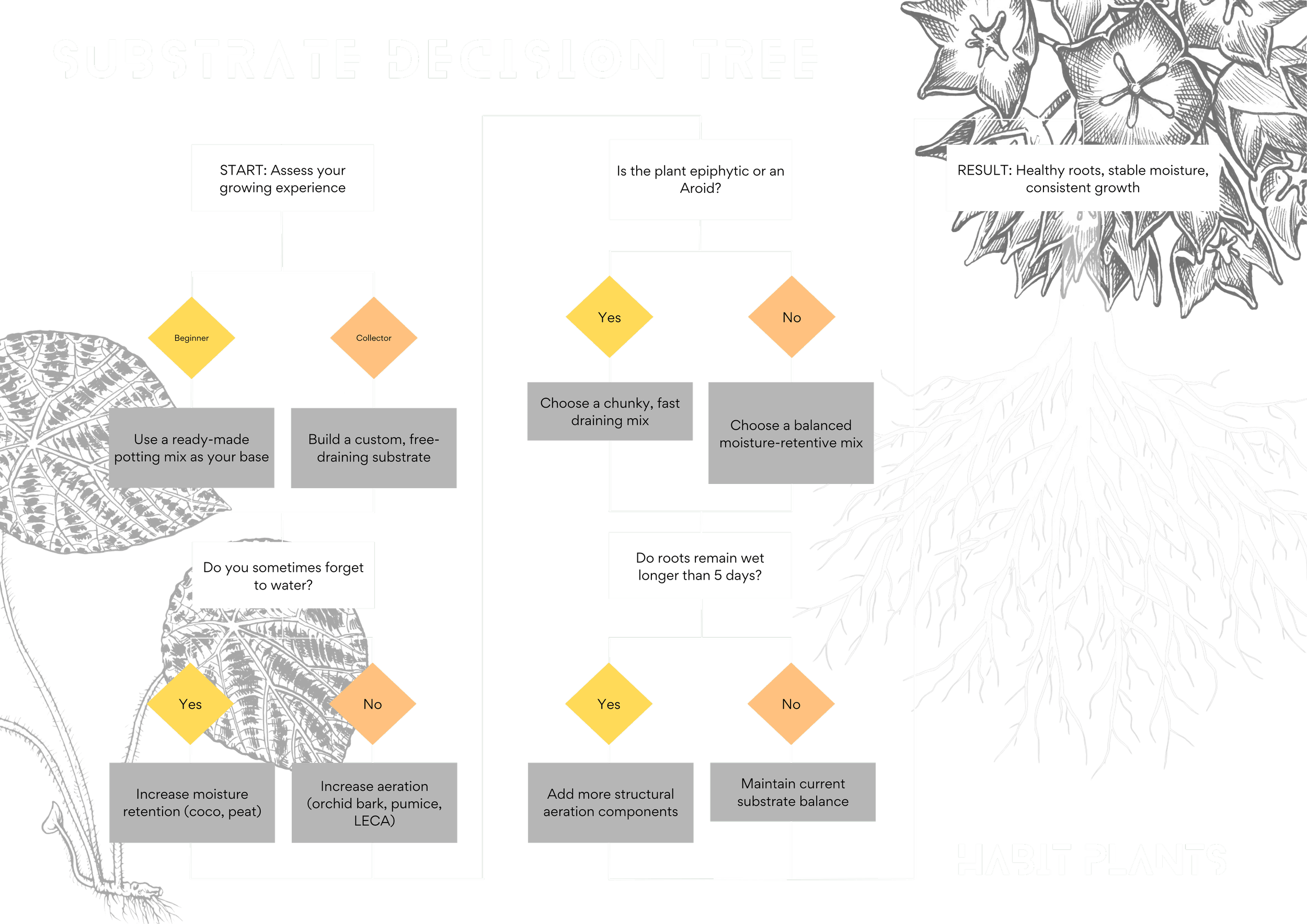
Choosing the Right Strategy (Self-Assessment)
Ask yourself:
Choose Beginner Strategy if:
You travel often
You forget watering
You own mostly common plants
You want low maintenance
Choose Collector Strategy if:
You enjoy tinkering
You fertilise regularly
You inspect roots often
You grow rare or sensitive plants
The Ideal Progression Path
Most successful growers evolve like this:
Store mix
↓
Store mix + perlite
↓
Add bark
↓
Chunky hybrid mix
↓
Custom species-specific substrates
Not overnight - over years.
The Advanced Insight
The best growers don’t ask: “What’s the best potting mix?”
They ask: “What root environment am I trying to create?”
Beginner substrates protect plants from growers. Collector substrates unlock plants for growers.